Too many disconnected tools to manage
The stack costs less once it stops being a stack
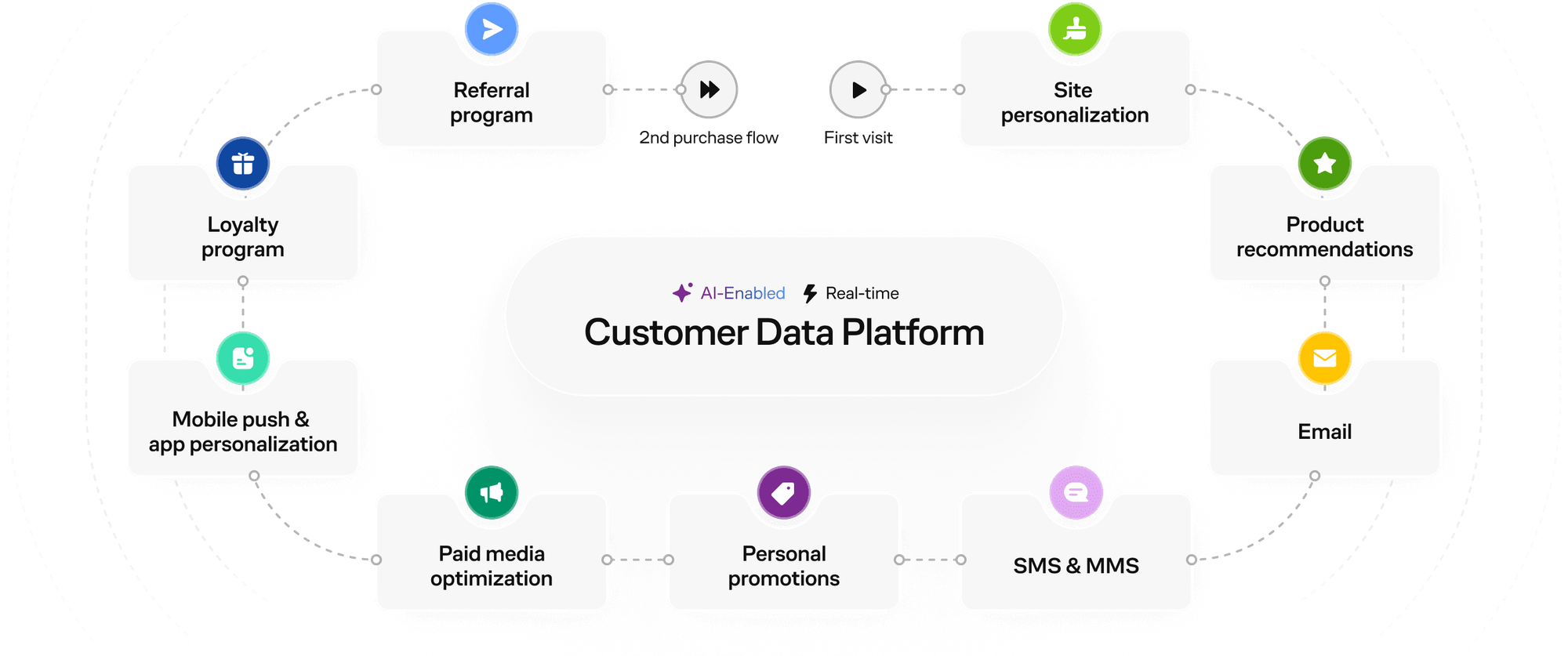
Maestra Platform is the all-in-one retention marketing platform for ecommerce brands, and consolidating onto it with a forward-deployed marketer has cut stack costs by as much as 64%.
Brands running on Maestra






The problem
Every channel lives in a different app
Email sits in one tool, SMS in another, loyalty in a third, and none of them share customer data. Teams end up manually exporting and re-importing information just to keep campaigns consistent. The more channels a brand adds, the worse the disconnect gets.
What we hear from brands
Current tools do not communicate well, causing fragmented data and workflows - a clean haircare brand with a small marketing team
Fragmented stack, separate email, SMS, upsell, and loyalty tools, with limited automation - a wellness-device brand
The new way
A forward-deployed marketer who knows the whole stack
Because everything runs on one platform, a single forward-deployed marketer can see the full customer journey and act on it directly, rather than coordinating across five vendor support queues. Each one handles a small number of accounts so they can go deep on one brand's setup instead of managing tickets across many disconnected tools.
Outcomes brands report
Customer proof
Svaha USA's basket grew once the tools agreed on the catalog

Recommendations from one vendor, loyalty from another, and email from a third meant the same dress kept showing up in sixteen colors. One catalog and one profile made the suggestions worth acting on.
 Read the full case study
+14%
average order value
How it works
The switch, from the marketing team's side
Week one
You agree the roadmap and grant access. Nothing changes for your customers.
The weeks after
Your marketer migrates data, warms domains, and rebuilds the programs while your current campaigns keep going out.
Launch week
Sending moves over channel by channel, and the old tools stay available until you decide you are done with them.
The platform
Enterprise capability, ecommerce timeline
The heavy parts of an enterprise CDP are already built and already connected to the channels, so the work left is configuration rather than a platform project. Brands get capability that used to take a year of integration.
Your forward-deployed marketer
The difference between advice and implementation
An agency sends recommendations and an invoice. Your marketer opens the platform and builds the thing, which is why the improvements that are technically easy but always postponed actually ship.
Work delivered in the platform, not as a deck
The postponed improvements get shipped
No separate services fee
Replace your stack
What a fragmented stack costs beyond the invoices
Split data means every question takes an export, and every campaign is built from a partial view. The subscriptions are the visible cost, the missing single profile is the expensive one.
Find out what a marketer would do first
Every account starts with a roadmap. Asking what would be on yours costs nothing and tells you a lot.